
THE POTENTIAL OF COMMERCIAL FLOATING SOLAR PANELS IN 2026
Floating solar panels are becoming of interest as one of the most practical solutions for commercial solar panels in 2026. As the global demand for renewable energy continues to rise, businesses, utilities, and governments are increasingly turning to water-based solar installations to increase clean energy production without competing for distinct land resources.
With renewable advancements, improving efficiency, and growing investment in the UK, floating solar is no longer an impossible concept, it’s becoming an important part of the renewable energy sector.
Quick Overview!
Floating PV, installed on water bodies, deliver 5-15% higher efficiency than land-based systems thanks to natural cooling. Deploying floating solar on just 10% of UK lakes could generate 2.7 TWh of electricity annually. Projects like the 6.3 MW Queen Elizabeth II reservoir array help save up to 2,500-4,194 tonnes of CO2 per year, supporting the UK’s climate targets. These systems also conserve water, reducing evaporation by 42-70%, improve water quality, and avoid competition with farmland or habitats. With global floating solar capacity projected to grow at over 23% per year through 2035, floating solar offers businesses and utilities substantial long-term cost and sustainability benefits, making it a crucial part of the UK’s clean energy transition.
Read More…
In this new article, we dive into opportunities, challenges, statistics, and the future of the floating PV system through a series of frequently asked questions.
WHAT IS FLOATING SOLAR PV?
Floating solar is a photovoltaic system mounted on buoyant structures that float on bodies of water such as reservoirs, lakes, irrigation ponds, quarry lakes, and water treatment facilities. The systems function similarly to solar installations on land, but are mounted on water rather than on rooftops or land.
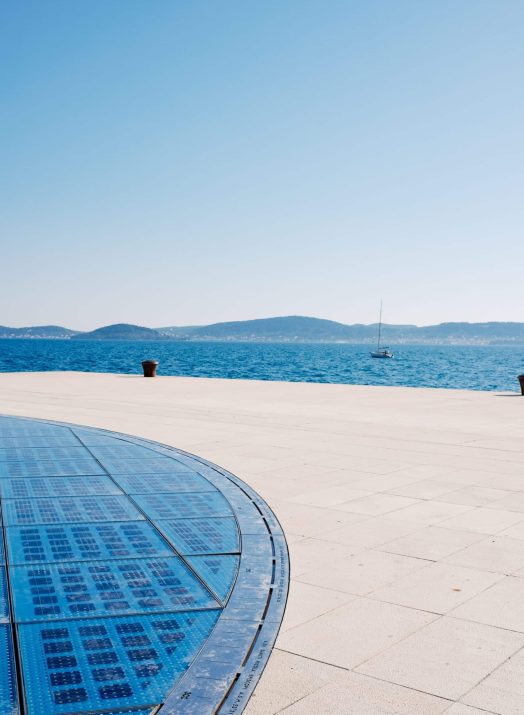
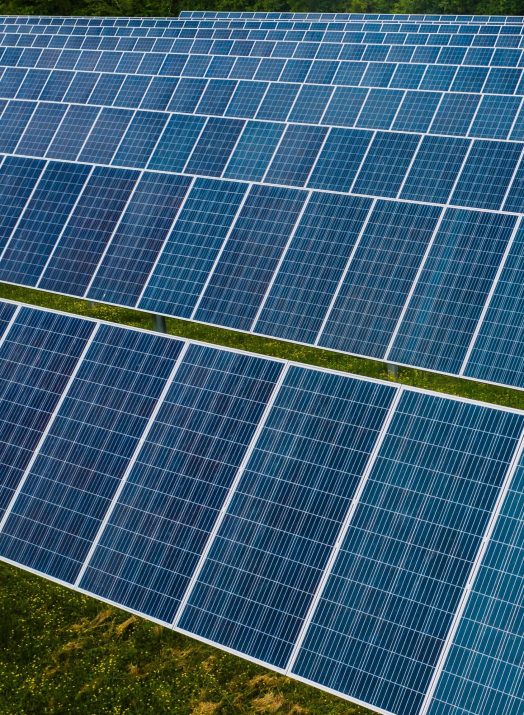
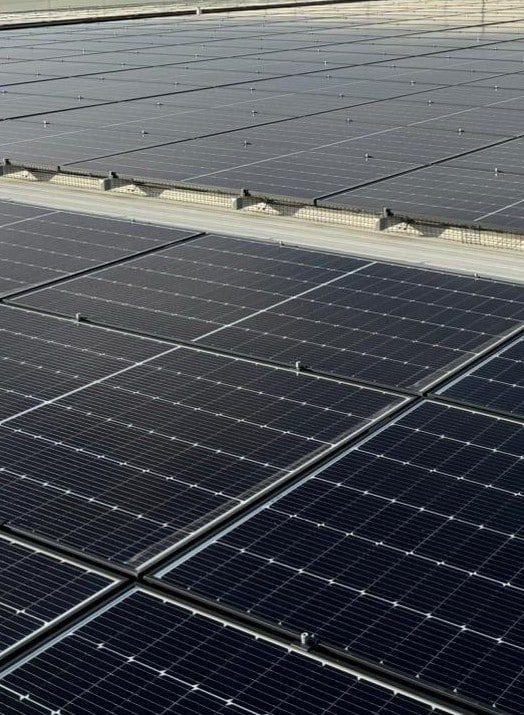
Here are examples of the three different types of installations:
FLOATING SOLAR PV
GROUND MOUNTED SOLAR PV
ROOFTOP SOLAR PV
Floating solar arrays are very attractive because they use unused water surfaces while generating substantial amounts of renewable electricity. In fact, floating solar delivers a cooling effect; water increase solar panel performance by 15% compared to commercial solar power ground-mounted or rooftop solar PV (Hydropower, N/A).
As the UK’s climate target becomes more ambitious, especially following the King’s 2026 speech, the King introduced the ‘Energy Independence Bill’. The king said, “My Ministers believe that energy independence must be a long-term goal of national security and that the nation’s energy security requires long-term investment and reform, as demonstrated by recent events in the Middle East.” (Gov.UK, 2026).
Keeping this in mind and given the increasingly constrained land availability, floating solar is expected to play a major role in supporting large-scale renewable energy generation in line with the ‘Energy Independence Bill’.

WHY ARE FLOATING SOLAR SYSTEMS GAINING POPULARITY IN THE UK?
They are gaining popularity due to several driving factors, both environmental and operational, for businesses, including higher efficiency, water conservation, reduced land use pressure, and the chance to improve water quality.
Here is an in-depth analysis of floating Solar’s key benefits:
EFFICIENT USE OF SPACE
One of the biggest advantages is that a floating solar installation does not require valuable commercial or agricultural land. This makes them particularly appealing in densely populated regions where land is expensive.
IMPROVED ENERGY PRODUCTION
Water naturally cools the solar panels, reducing heat-related efficiency losses. Cooler operating temperatures often result in higher energy output, by roughly 5% to 15%, compared to land-based solar PV.
WATER CONSERVATION BENEFITS
Floating solar arrays can reduce evaporation by up to 70%. This benefit is especially valuable in regions facing water shortage; these systems avoid taking up valuable agricultural space.
SUSTAINABILITY GOALS
Many business owners are searching for ways to meet net-zero commitments. Floating solar offers an opportunity to generate renewable electricity while making efficient use of existing infrastructure.
GROWING GOVERNMENT SUPPORT
Governments across Europe are increasing the use of floating solar within renewable energy strategies, creating favourable conditions for investment and utilisation.
FLOATING SOLAR PANELS: ADVANTAGES AND DISADVANTAGES
Like any technology, floating solar panels have both strengths and weaknesses:
ADVANTAGES OF FLOATING SOLAR | DISADVANTAGES OF FLOATING SOLAR |
✅No Land Consumption Floating solar systems use water rather than occupying valuable land resources. | ❌Higher Initial Costs Floating infrastructure, anchoring systems, and specialised installation requirements can increase upfront investment. |
✅Higher Efficiency The cooling effect of water can improve performance and increase overall energy output; the panel runs 10-20 degrees Celsius cooler than on rooftop.
| ❌Maintenance Challenges Accessing and maintaining equipment on water can be more complex than servicing traditional solar installations; boats and trained crews are hired for solar panel maintenance. |
✅Reduced Water Evaporation Water surface coverage can significantly reduce evaporation rates in reservoirs and ponds. | ❌ Environmental Considerations Projects require careful assessment to ensure minimal impact on aquatic ecosystems. |
✅Scalability Large reservoirs provide considerable space for commercial-scale renewable energy generation. | ❌ Weather Exposure Strong winds, storms, and changing water levels require strong engineering and ongoing monitoring. |
✅Environmental Impacts Floating solar contributes to emissions reduction, supports broader clean energy objectives, and less soiling means less cleaning and maintenance.
|
|
Floating vs Roof-Mount vs Ground-Mount
Businesses evaluating solar energy usually compare floating systems with traditional alternatives.
We’ve put together a comparison table so that you don’t have to:
Solar PV Installation | Installation Space | Cooling Effect | Expansion Potential | Maintenance Access | Commercial Scale |
Floating Solar | Water surfaces | High | Excellent | More complex
| Very high |
Roof Mount Solar | Existing buildings
| Limited | Limited by roof size | Easier | Moderate |
Ground-Mount Solar | Open land | Moderate | Depends on land availability | Easier | Very high |
Floating solar is usually the better choice when:
✅ Suitable water bodies are available.
✅ Land costs are high.
✅ Large-scale renewable energy generation is required.
✅ Water conservation is a priority.
When Roof-Mount Solar Is Better
Roof-mounted systems are ideal for businesses with unused roof space and a straightforward installation process.
When Ground-Mount Solar Is Preferred
Ground-mounted solar continues to be attractive when low-cost land is available and large-scale deployment is needed.
Rather than replacing traditional solar systems, floating solar is gradually complementing them.
WHO DOES FLOATING SOLAR SUIT?
SUITABLE SITES/OPERATORS | NOT WELL-SUITED FOR |
✅ Water utilities with available reservoirs. | ❌ Residential properties. |
✅ Industrial facilities with cooling ponds. | ❌ Small commercial premises. |
✅ Mining and quarry firms with on-site lakes. | ❌ Farms focused on agriculture. |
✅ Hydropower operators managing reservoirs. | ❌ Projects under 500 kWp. |
✅ Aquaculture businesses with managed ponds. | ❌ Buyers seeking payback in under 10 years (UK). |
Statistics, Facts, and Figures About Floating Solar Panels
The growth of floating solar is supported by impressive industry data encouraging the UK’s opportunities for floating solar, including Europe’s largest floating solar array, the Queen Elizabeth II reservoir, near London.
This system includes 23,000 panels, covers a 6.3MW capacity, and powers a nearby water treatment plant while saving 2,500 tonnes of carbon emissions annually (CEH, 2024). This impactful installation is proof that the UK is on route to further expansion of implementing floating solar.
Covering an estimate of 10% of UK lakes (Solar Power Portal, 2024) could generate 2.7TWh of electricity annually. Floating solar delivers a massive reduction on carbon emissions.
The case study completed – Whisby Solar Lakes, by Conrad Energy, estimates that the project will save around 4,194 tonnes of CO2 every year, equivalent to driving 54,455,820 miles (Conrad Energy, N/A)
FAQs About Floating Solar
Are floating solar systems more efficient than land-based systems?
Yes, in most cases, water helps cool the panels, lowering operating temperatures by 4°C to 6°C, reducing temperature-related efficiency losses and increasing energy generation by 5% to 15%.
Can floating solar damage aquatic ecosystems?
Properly designed projects undergo environmental assessments to decrease impacts and ensure responsible deployment. While small arrays provide benefits, big arrays can have negative impacts on plankton, submerged plants, and fish populations if not carefully managed.
Are floating solar projects suitable for commercial businesses?
Absolutely. Commercial facilities with access to suitable water bodies can benefit from large-scale renewable electricity generation and reduced energy costs.
Is floating solar only suitable for large reservoirs?
No, floating solar can also be deployed on industrial ponds, water treatment facilities, irrigation reservoirs, and quarry lakes.
Will floating solar continue growing after 2026?
Yes, floating solar indicates strong long-term growth as organisations seek efficient ways to expand renewable energy capacity, and the global market is expected to increase by 2035, expanding at an annual growth rate of 23%.
CONCLUSION OF THE POTENTIAL OF COMMERCIAL FLOATING SOLAR IN 2026

Floating solar panels represent one of the most exciting developments in commercial renewable energy. By using water surfaces, improving energy efficiency, conserving water resources, and supporting sustainability goals, they offer smart energy solutions for business. While challenges such as installation costs and maintenance requirements continue, ongoing technological innovation is consistently addressing them.
As renewable energy accelerates in the UK, floating solar is positioned to become an increasingly important solution for clean, scalable, and commercially viable electricity generation in 2026 and beyond.
Do you have more questions about floating solar or want to explore further? Visit our contact us page for more answers, and renewable energy expert support!