
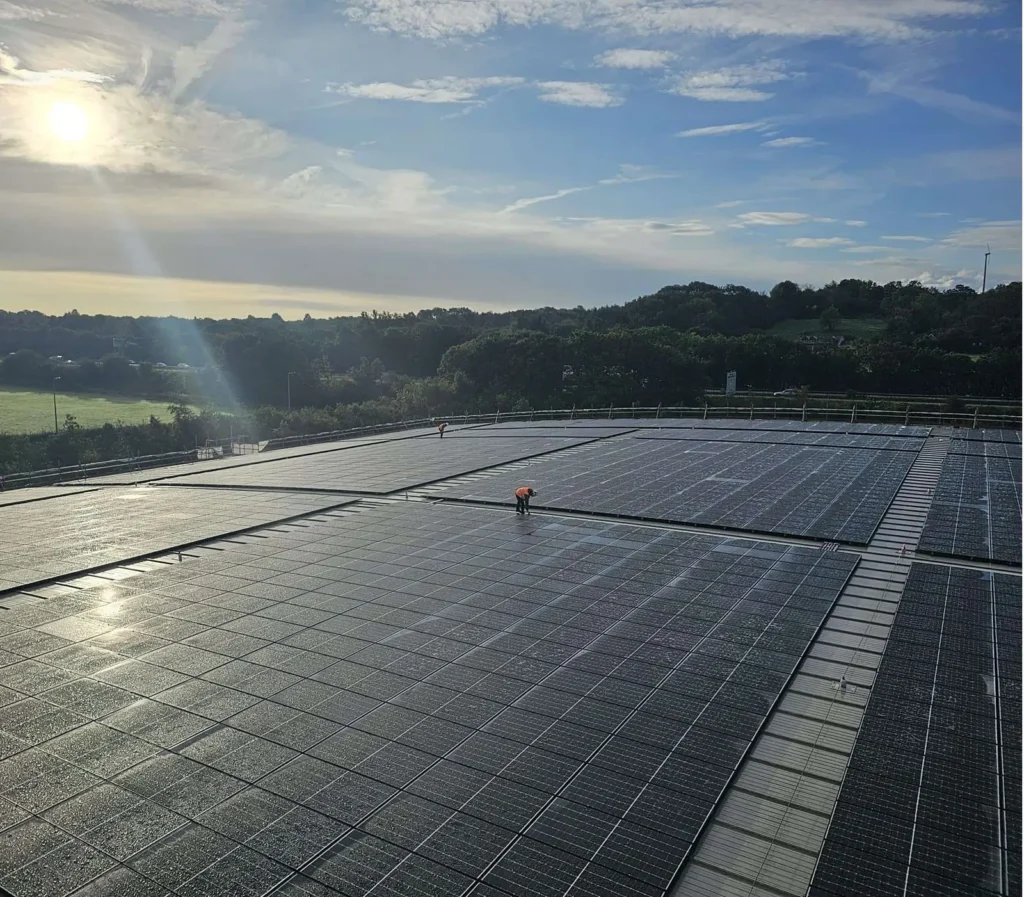
Solar panels return on investment (ROI) is now one of the strongest financial incentives for UK businesses in 2026. As energy prices stay unpredictable and the demand for sustainability rises, commercial solar has become more than just a green initiative; it’s a smart financial decision. Forward-thinking companies see solar as a high-return, low-risk asset that provides long-term savings, price stability, and measurable gains.
What was once seen as a purely environmental upgrade is now embraced as a strategic investment, improving profits much like upgrading machinery or streamlining operations. For UK businesses, solar is not just about energy; it’s about ensuring profitable growth in the future.
Rising Energy Costs Are Driving Change
The chaotic period after 2022 brought unprecedented energy price increases in the UK, unsettling commercial sectors. Businesses that were accustomed to stable energy costs suddenly faced sky-high bills, shrinking profit margins, and significant uncertainty. For context, commercial electricity rates in 2022 skyrocketed to over 53p per kWh for small businesses.
Although prices have stabilised somewhat in 2026, with small businesses now paying around 24-27p per kWh and larger companies securing rates as low as 21p, these amounts are still about 70% higher than before 2020. This significant gap highlights the ongoing instability and underscores the crucial need for businesses to manage their operational costs better.
Investing in solar provides a strong solution to this unpredictability. By generating their own electricity, companies lock in long-term energy rates and protect themselves from market fluctuations and future price spikes. This forward-thinking approach allows for more effective financial planning and budgeting, providing businesses with a competitive edge in a volatile market. The immediate and ongoing energy savings from commercial solar panels in the UK are a significant factor in why companies seeking financial stability are investing in solar panels.
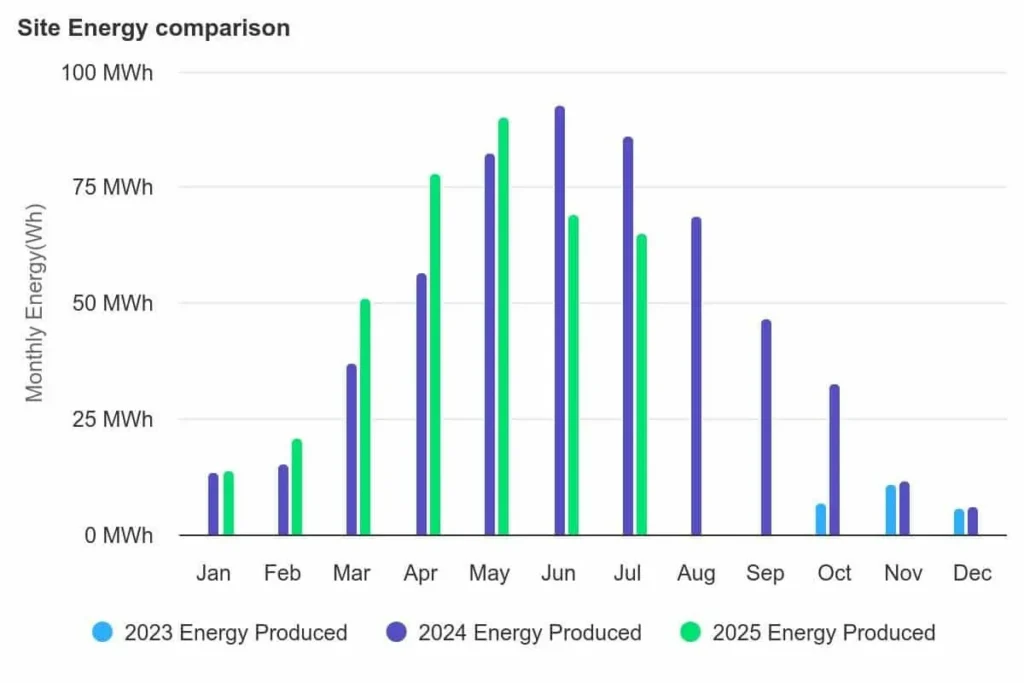
Commercial Solar Panels return On Investment
The financial case for commercial solar panels in the UK is becoming increasingly strong, with excellent returns on investment (ROI). On average, businesses can expect a payback period of 5 to 10 years. Some larger, energy-intensive facilities such as warehouses and industrial sites may see returns in as little as 3 to 7 years due to their high energy usage and significant savings on importing power from the grid.
For instance, a typical commercial installation costing £50,000 might yield annual electricity savings of £8,000, plus an additional £2,000 from programs such as the Smart Export Guarantee (SEG) for selling excess power back to the grid; this total annual saving of £10,000 leads to a payback period of just 5 years.
This solid return on investment makes solar an undeniable financial asset. It’s essential to recognise that solar systems are a reliable technology, having proven effective for users for decades. The ongoing fluctuations in the energy market and the constant push towards net-zero goals underscore the value of solar for any business seeking to remain competitive in its industry.
Energy Independence and Business Continuity
Besides cost savings, adopting solar power offers important energy independence and improved business continuity. By generating their power, businesses can greatly reduce their dependence on the national grid. This protects operations from possible grid failures or sudden price shifts. This is especially vital for companies that need an uninterrupted power supply, such as manufacturing plants, data centres, and logistics hubs.
Adding battery storage solutions provides a dependable backup power source. These systems warrant businesses to store excess solar energy generated during sunny periods for use when energy production is low, such as in the evenings or on cloudy days, or when electricity prices are high. Managing energy use this way increases savings and adds resilience.
The introduction and planned expansion of programs like time-of-use charging and discharging for battery systems, as well as the idea of "sleeving," which allows energy to be generated in one area and used in another, and the continued development of intelligent energy and microgrids, strengthen Solar and the future of business energy. These initiatives ensure that energy resilience from commercial solar panels in the UK remains a top priority.
Government Solar Incentives & CfD Scheme
The UK government continues to support the shift to renewable energy through various incentives, making 2026 an ideal time for businesses to invest in solar energy. The Contracts for Difference (CfD) scheme, for instance, helps stabilise revenues for renewable electricity generators by protecting them from fluctuating wholesale prices while also safeguarding consumers. Solar falls under Pot 1 of the CfD scheme, which includes more established technologies, ensuring consistent access to these essential contracts.
Regarding tax relief, businesses can claim 100% capital allowances on their investment in qualifying plant and machinery, including solar panels. This means they can deduct the entire cost from their taxable profits in the purchase year. This "full expensing" measure significantly lowers the upfront cost of a solar installation.
While residential solar installations currently have a zero VAT rate until March 2027, businesses can typically reclaim the full VAT paid on the installation. Charities and non-profits may qualify for reduced VAT rates. These strong tax incentives, particularly the 100% relief on project costs against capital gains tax, demonstrate the government's commitment to promoting the adoption of renewable energy. These favourable policies make UK commercial solar incentives in 2026 very appealing for smart businesses.

Eco Credentials and Corporate ESG Goals
With rising environmental awareness, a company's eco-credentials and commitment to Environmental, Social, and Governance (ESG) goals are increasingly important. Solar power provides a straightforward means for companies to demonstrate their commitment to sustainability and support net-zero targets. By generating clean, renewable energy on-site, businesses significantly lower their carbon footprint, which aligns with strict ESG compliance needs.
Beyond compliance, adopting solar energy offers notable benefits in terms of green public relations and branding. Companies can showcase their commitment to a greener planet, improving their reputation among customers, investors, and employees. The ability to sell carbon credits saved through on-site energy generation through various emerging channels adds to both the financial and reputational benefits.
This commitment to sustainable practices, primarily using commercial solar panels and an ESG strategy, gives businesses a competitive advantage and builds a positive public image, contributing to the overall betterment of our planet.
Thinking about solar for your business?
Tell us about your site and we will come back with a free, no-obligation desktop consultation and a clear payback estimate. Prefer a quick answer? Estimate your savings with our solar calculator.
Smart Technology Driving Adoption
Rapid advancements in solar technology are steadily boosting adoption. Modern panels demonstrate impressive efficiencies, with some reaching up to 28%. Leading Tier 1 manufacturers offer performance warranties exceeding 30 years. Developments such as bifacial panels, which capture sunlight from both sides, can improve energy output by 10-30%, or even up to 45% under optimal ground-mounted conditions. This means more power can be generated from a smaller area, which is crucial for businesses with limited roof space.
As well as more efficient panels, smart inverters and remote monitoring are changing the commercial solar industry. Smart inverters enrich energy conversion and provide real-time data. Remote monitoring and data analysis allow for accurate performance tracking.
This means issues with low generation or prospective faults can be identified without needing to visit the site. When an on-site visit is necessary, technicians arrive informed about the problem and its location within the system, making repairs easier and more affordable for the client. These advances make modern commercial systems effective, reliable and easy to maintain.
Industry Momentum and Solar Panels ROI Case Studies
The momentum in the UK commercial solar sector is clear, with more businesses realising the extensive benefits. Success solar panels return on investment stories are emerging across various industries, from large warehouses and logistics centres to manufacturing facilities and busy retail spaces.
For example, Excel Energy helped QuidelOrtho, a pharmaceutical manufacturer based in South Wales, install a 1.58 MWp solar PV system and is now saving over £472,000 on energy bills every year, while also reducing their carbon emissions by 272 tonnes annually.
A Plymouth-based Health Club is seeing similar benefits from their solar PV system provided by Excel Energy. They are now emitting 23 tonnes less of CO2 annually, with their investment proving profitable in under five years.
Clients of renewable energy technology providers consistently report significant advantages, highlighting strong energy solutions that significantly cut energy bills, are designed to decrease ongoing maintenance costs, and are ready for future technology integrations.
The rise in adoption within the retail, manufacturing, and logistics sectors demonstrates the broad appeal and practical applications of solar energy. Businesses in the UK that are installing commercial solar panels in 2026 are not merely saving money; they are investing in long-term stability, sustainability, and a competitive future.
Solar Panels Return On Investment The Business Case is Clear
Solar is no longer a luxury, it’s a necessary investment for any forward-thinking UK business. With a proven solar panel return on investment and payback periods often between 5 and 10 years, the financial case speaks for itself. That’s why it makes sense to join the solar revolution with a trusted, tenured partner like Excel Energy Ltd.
Contact us today for a free consultation and discover how a bespoke commercial solar PV system designed and installed by our expert team can deliver significant energy savings, long-term value, and all the benefits outlined above.
Turn this into a plan for your site.
Excel Energy designs, installs and maintains commercial solar, battery storage and EV charging for UK businesses. We are MCS, RECC, NAPIT and TrustMark accredited and have published 27 case studies with real system sizes and paybacks. About us · Case studies · Accreditations
What would this mean for your site?
Pick your property type, roof size and region for an instant saving range, then unlock payback, system size, cost and 25-year return with your email.
Or map your roof in the full calculatorFree solar estimate
Your free solar estimate
Answer three quick questions to see what solar could save your business. It takes about 20 seconds.
Your estimated saving
£20,800 - £28,100 a year
- Payback7.0 yrs
- System size200 kWp
- Installed cost (ex VAT)£151k - £188k
- 25-year net return£405,000
Payback, system size, cost and 25-year return unlock with your details.
Your full estimate is ready, and a solar engineer will check it against your roof. Want more detail? Map your roof in the full calculator
Estimate for a flat roof with typical on-site use, using UK government price data and PVGIS solar data (excluding VAT). Your survey gives exact figures.
Where should we send your estimate?
Your full figures appear here straight away. A solar engineer will then check them against your roof, free and without obligation.
Start with a free site survey for your business
Tell us about your site and your energy use. An Excel Energy engineer will come back with a clear, no-obligation view of what solar could save you.
- No-obligation desktop assessment
- Design, installation and aftercare from one accredited team
- Clear savings and payback figures before you decide
Prefer to talk? Call 0203 834 9440
Request your free survey
Tell us about your site and we will come back to you with a no-obligation assessment.